It was fifty degrees and sunny today, with no end to the good weather in sight, so we're far enough removed from freezing our hineys off that I can write about snow!


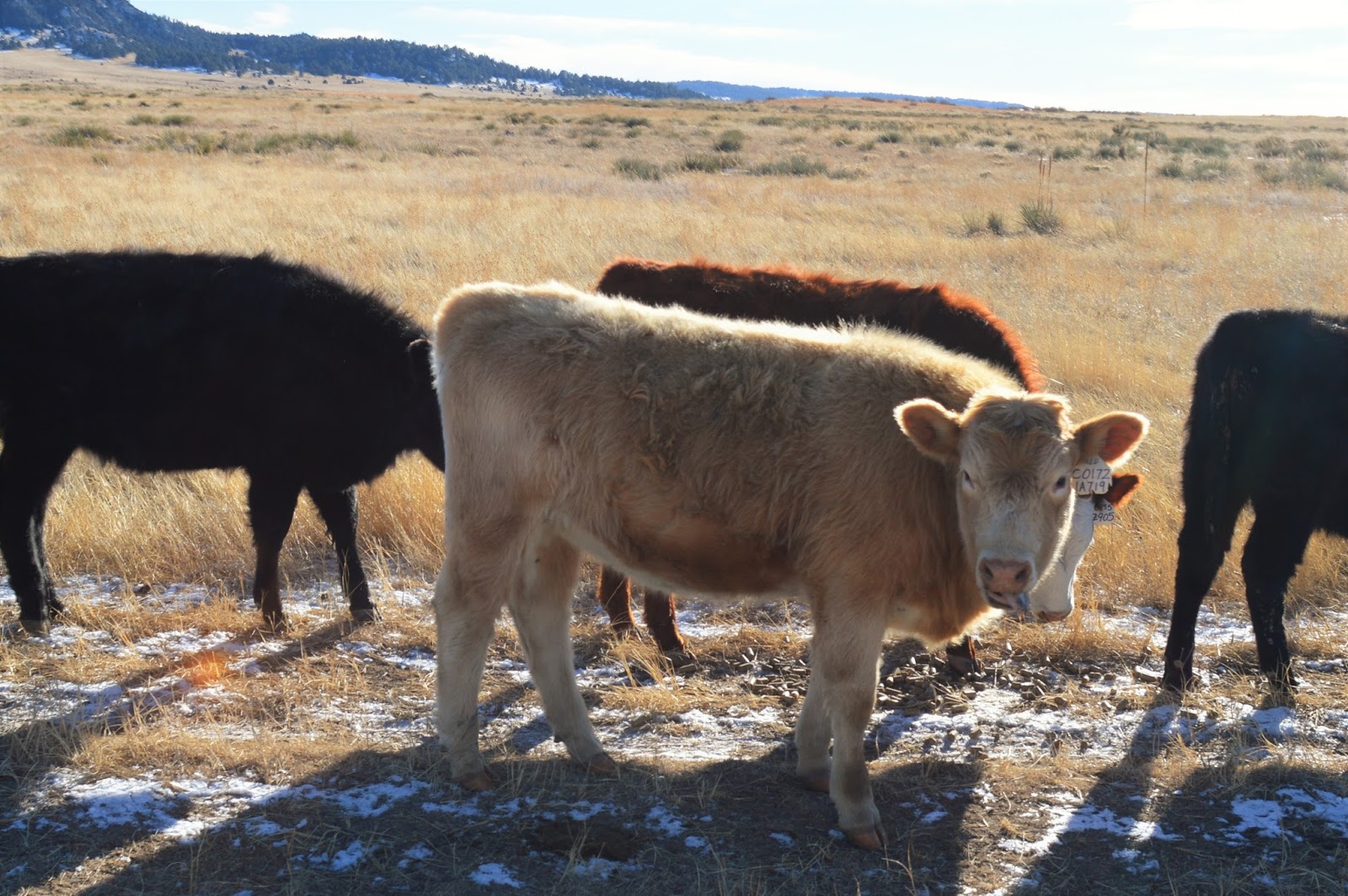
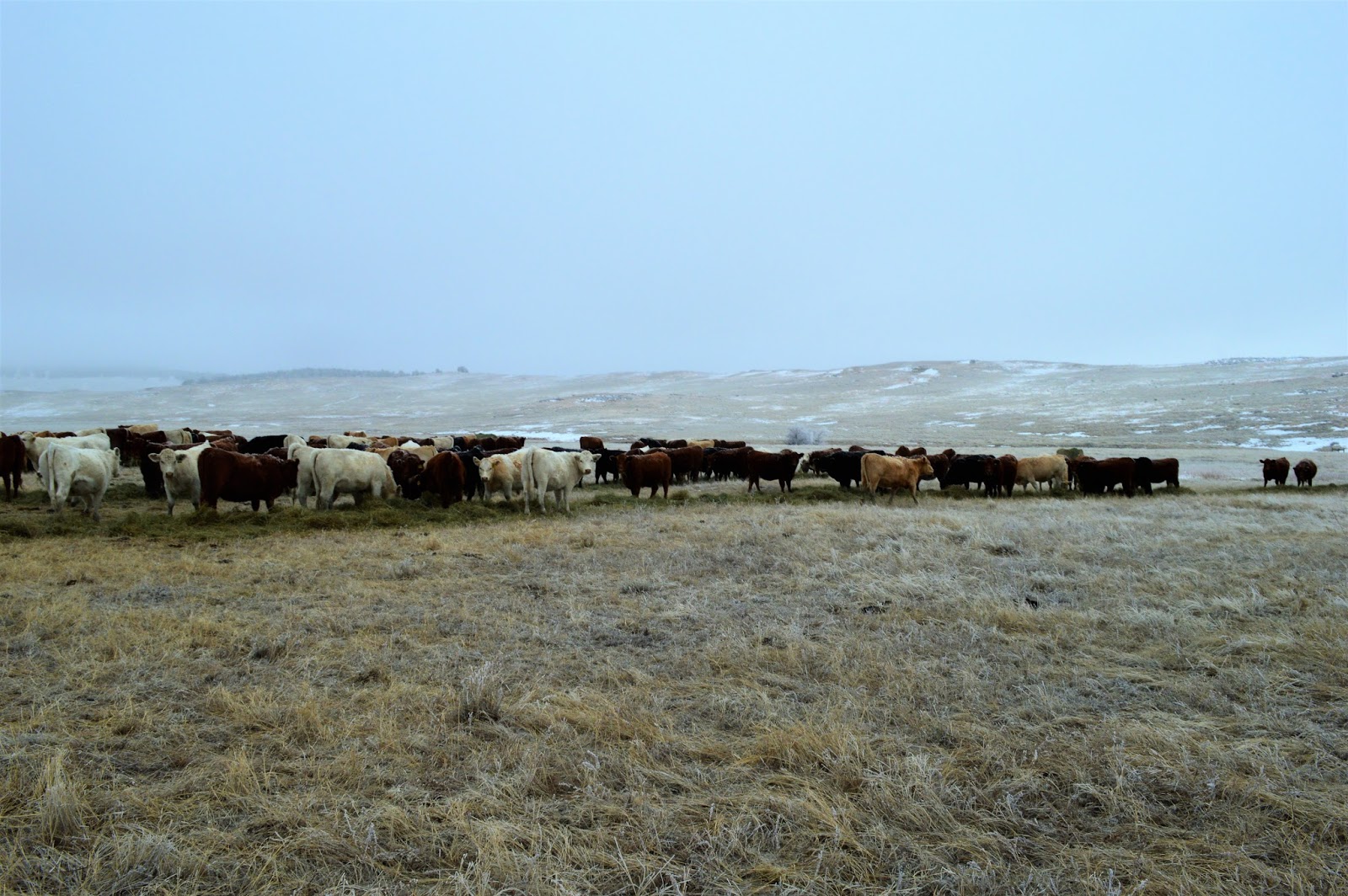
A question we get asked a lot is "What do you do with the cows when it snows?" They stay outside, we just take extra good care of them!
The main thing is food, food, food. Cows eat more to keep themselves warm and keep up their milk supply. Bert will feed the cows extra hay, and then give them a whole extra bale of oat hay or straw for the calves to lay in. He’ll also bring them into a pasture between the pivot (where they go when they’re big) and the barn (where they’re born) that’s mostly trees, to give them more shelter.
The main thing is food, food, food. Cows eat more to keep themselves warm and keep up their milk supply. Bert will feed the cows extra hay, and then give them a whole extra bale of oat hay or straw for the calves to lay in. He’ll also bring them into a pasture between the pivot (where they go when they’re big) and the barn (where they’re born) that’s mostly trees, to give them more shelter.


In the pens, we’ll bed them deep with straw, feed them extra food, and try to bring the cows into the barn as they calve so the babies are born in the barn where it’s warm and dry.

The calves are checked a LOT more often, too. Normally, you don’t have to worry as much about the older calves since they are bigger and stronger, but when we get a lot of snow and wind, they can freeze down or get buried, so it’s important to make sure that they are doing well and their mothers are taking good care of them.

If a calf gets cold or sick in these storms, there isn’t always time to bring the mother and the calf in together. While that’s always the ideal situation, sometimes it’s more important to get the calf warm and treated than to bring the pair in together. They are reunited as soon as possible, but keeping the calf alive is always the number one priority. One of my greatest frustrations involving cattle is when you’re trying to bring a mom in to her calf and she just won’t go because MOM JUST COME WITH ME I’M TAKING YOU TO YOUR BABY GEEZ.
Cold kills more calves than the snow does, so storms like the one we’re in now where it snows a foot and then gets down to below zero at night are the really scary ones. Checking, checking, checking all the time.
How do you know if calves are cold? A good way is to put your finger in their mouth. If it’s cold inside, then that calf is cold inside too. You can also feel their feet or their ears, since you can tell by touching them if the calf has or is well on the way to having frostbite, which is another good indicator that they need to be warmed up. You can also tell by how they look or how they’re laying if they’re feeling poorly or if something’s wrong.
If a calf gets cold, they come into the barn and get put into the hot box. Every ranch has a different variation of a hot box involving a box with a small opening or a door lined with straw and heated with heat lamps. If the hot box is in use or too far away, the floor boards of the pickup with the heat blasting are also a popular option, as is inside a (heated) vet room, or the kitchen floor!
How do you know if calves are cold? A good way is to put your finger in their mouth. If it’s cold inside, then that calf is cold inside too. You can also feel their feet or their ears, since you can tell by touching them if the calf has or is well on the way to having frostbite, which is another good indicator that they need to be warmed up. You can also tell by how they look or how they’re laying if they’re feeling poorly or if something’s wrong.
If a calf gets cold, they come into the barn and get put into the hot box. Every ranch has a different variation of a hot box involving a box with a small opening or a door lined with straw and heated with heat lamps. If the hot box is in use or too far away, the floor boards of the pickup with the heat blasting are also a popular option, as is inside a (heated) vet room, or the kitchen floor!

So, next time it snows, or gets very cold, or next time you hear someone say that ranchers don’t care about their animals, remember that while the rest of the world is taking snow day, they’re working even longer hours—sometimes around the clock—outside in the blizzard taking care of everything.